By Analyst Team · Updated 2026-08-11 · 10 min read
Is IPTV legal? That is one of the first questions anyone asks when they see an IPTV subscription advertised — and it is a fair one. The quick answer is yes, IPTV is legal as a technology. The real question is whether the provider you are using actually owns the rights to the channels and films it streams. In this complete guide, I'll show you exactly how to tell legal IPTV services from pirate operations, what the risks are, and how to move forward with a safe IPTV subscription that won't disappear after your first payment.
Most of the confusion comes from the fact that the same word, "IPTV," is used for both legitimate platforms and shady grey-market operations. The term itself simply means television delivered over the internet. When you watch live TV through your broadband connection, you are already using IPTV. The difference is that legal IPTV providers pay for content distribution rights, respect regional agreements, and operate transparently. Pirate IPTV services do none of that.
The featured setup above shows what a legal multi-device IPTV experience looks like: one account, several screens, and a clean interface. That is the experience this guide is here to help you find.
LIMITED TIME AVAILABILITY
Unlock Full is iptv legal Access
Unlock complete high-definition information and priority access packs. Lock in your pricing model today before plans return to standard regional metrics.
What Is IPTV, Exactly?
IPTV stands for Internet Protocol Television. Instead of receiving a broadcast signal from an antenna, satellite dish, or coaxial cable, your device receives a stream of data packets over the internet. A legal IPTV provider organizes those streams through an app or portal and gives you access to live TV channels, video-on-demand libraries, and often cloud DVR features.
Related entities you should know are right holders (the broadcasters and studios that own content), ISPs (who deliver the data), content delivery networks (which host and speed up streams), DRM (the encryption legal services use), EPG (the on-screen guide), and OTT apps like Netflix or YouTube TV, which also use IP-style delivery. If you understand these pieces, you can answer most "is IPTV legal" questions on your own.
IPTV Legality Explained: The One Test That Really Matters
The single most important test is licensing. A legal IPTV service only delivers content it has been authorized to show in your region. An illegal IPTV service does not worry about authorization — it captures premium channels from a satellite feed or cable stream and rebroadcasts them for pennies.
Let's be direct about pricing, because that is how most people end up on the wrong side of this issue. If a service offers 10,000 international channels for a flat $10 per month, it is almost certainly pirated. Licensed services operate on narrow margins; they cannot sustain that kind of offer legally. That is why "is IPTV legal in the USA" almost always leads to the same conclusion: the technology is legal, but most ultra-cheap providers are not.
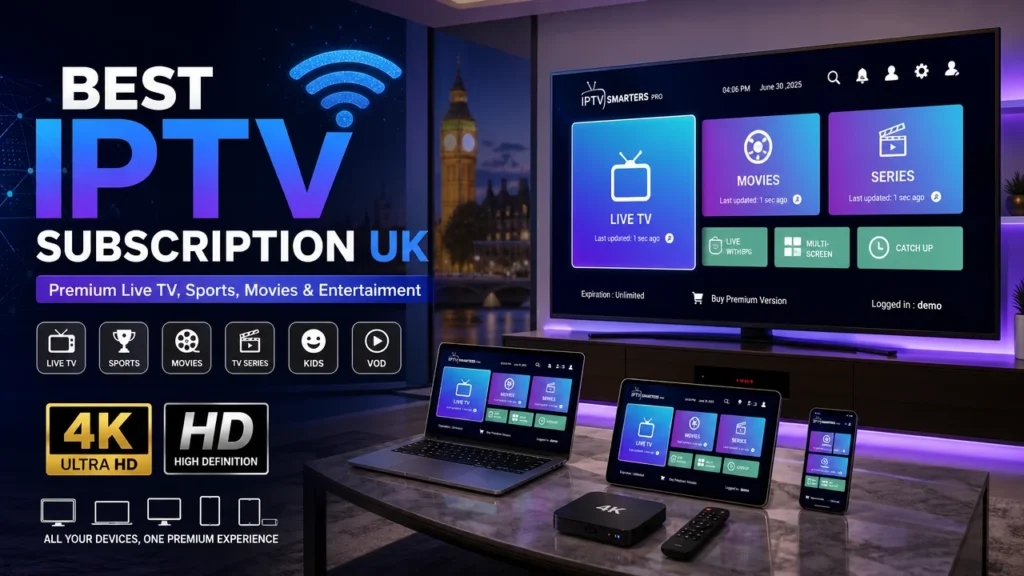
The image below shows what a licensed IPTV stream should look like in practice — sharp 4K sports, correct channel artwork, and an electronic guide that loads instantly without buffering or piracy toolbars.
How IPTV Works Step by Step
If you want to judge whether an IPTV service is legal, it helps to understand where the stream comes from. Here is the step-by-step lifecycle of a stream through a legitimate IPTV provider:
- Rights acquisition — the IPTV provider purchases broadcasting rights from the content owner for specific regions and time windows.
- Signal acquisition — the provider receives live broadcast signals from official satellites, fiber feeds, or direct studio integrations.
- Transcoding — the raw signal is converted into different digital formats, resolutions, and bitrates suited for smooth internet delivery.
- CDN distribution — streams are cached on servers worldwide so that your connection reaches a nearby, fast content delivery node.
- Authentication and DRM — the service verifies your subscription and encrypts the stream with digital rights management to prevent unauthorized copying.
- Playback — your Smart TV, phone, set-top box, or browser decodes the data and displays the channel on your screen.
Legal providers follow this licensing-first process. Illegal ones skip steps 1 and 5, pull a feed from somewhere, and resell it until they get shut down. That is IPTV legality explained in practical terms.
Concrete Benefits of Choosing a Legal IPTV Provider
You might wonder: if pirate IPTV is cheap, why bother with a legal subscription? Because "legal" brings real advantages that go far beyond avoiding risk:
- Peace of mind — no fear of ISP warnings, legal notices, or the service vanishing.
- Stability — legal services do not go offline overnight when a pirated source gets pulled.
- True 4K quality — licensed streams are reliable and bitrate-stable, not compressed into mush.
- Multi-device freedom — official apps for Smart TV, phone, Fire TV, web browser, and set-top boxes.
- Customer support — a legal provider answers when your stream hiccups.
- Complete features — searchable EPG, cloud DVR, parental controls, and a proper video-on-demand library.
Honest Limitations You Should Keep in Mind
No streaming solution is perfect. Legal IPTV has some limitations that are worth knowing before you subscribe:
- Internet dependency — you need a stable connection, ideally 25 Mbps or more for reliable HD and 4K.
- Regional rights — content availability changes by country because broadcasters license regionally.
- Realistic pricing — legal IPTV is cheaper than cable, but not "$10 for 10,000 channels" territory.
- App setup curve — some providers work through universal players like TiviMate or IPTV Smarters, which require manual configuration.
- Simultaneous stream limits — most legal subscriptions cap viewing at one to three devices at once.
Legal IPTV vs. Cable vs. Illegal IPTV: Side-by-Side Comparison
Still deciding between providers? This IPTV legal vs illegal comparison table shows exactly where services differ.
| Feature | Legal IPTV | Traditional Cable | Illegal IPTV |
|---|---|---|---|
| Monthly price | $25–$90 depending on package | $60–$150 plus fees and contracts | $5–$15, but extremely risky |
| Content rights | Full license to broadcast and stream | Full license to retransmit | No license; pirated feeds |
| Device support | Official apps for Smart TV, phones, Fire TV, etc. | Set-top box with licensed apps | Unverified APK files and modified apps |
| Stream stability | Consistent uptime; CDN-backed streams | Very stable, dedicated infrastructure | Frequent downtime and buffering |
| Legal exposure | None for subscribers | None | ISP warnings, blackouts, legal complaints |
| Customer support | Email, chat, knowledge base, social care | Phone, stores, technician visits | Telegram or WhatsApp until they vanish |
Weighing your options? The full is iptv legal provider comparison continues below.
Explore a licensed IPTV plan →Secure special promotional rates instantly before the window closes.
Activate Your is iptv legal Subscription Now →Pros and Cons at a Glance
Pros of Legal IPTV
- Fully licensed with zero legal stress
- Flexible device support with official apps
- Better uptime and stable 4K streams
- Cloud DVR, catch-up TV, and VOD included
- Responsive customer and community support
Cons to Keep in Mind
- Requires a solid broadband connection
- Monthly price higher than pirate deals
- Content library changes by country
- Manual setup needed for some players
- Limits on simultaneous streams
Who Should Choose a Legal IPTV Service?
Legal IPTV is not just for tech enthusiasts. It fits a number of realistic user profiles:
- Cord-cutters who paid cable bills for years and want a cleaner, cheaper way to watch live TV.
- Expats and international viewers who want licensed home-country channels without breaking local or international copyright law.
- Sports fans who need a package with official league rights and no mid-game buffering.
- Budget-conscious families who want one predictable bill with kids' channels, documentaries, and on-demand movies.
- Security-conscious viewers who refuse to install unknown modified apps onto their expensive TV hardware.
How to Get Started With a Legal IPTV Subscription
Ready to find a legal provider? Follow these practical steps to avoid the grey market and land somewhere trustworthy:
- Test your connection speed first. Use a speed test and aim for at least 25 Mbps on the device you plan to watch.
- Identify your device ecosystem. Do you use a Smart TV, Fire TV Stick, Android phone, or iPhone? The best legal IPTV service for you depends on app availability.
- Search for "best legal IPTV service 2026" and read comparisons that mention licensing, uptime, and channel counts by country.
- Verify the provider's region rights. A service can be legal abroad but not licensed for your country. Their support team should answer this clearly.
- Use the trial period. Legal providers usually offer 24-hour or 7-day trials. Test prime-time viewing, sports, and 4K channels.
- Start monthly, then commit. Avoid prepaying for a year until you have used the service for at least a month.
- Install only from official app stores. If the provider tells you to sideload a file from a random website, walk away.
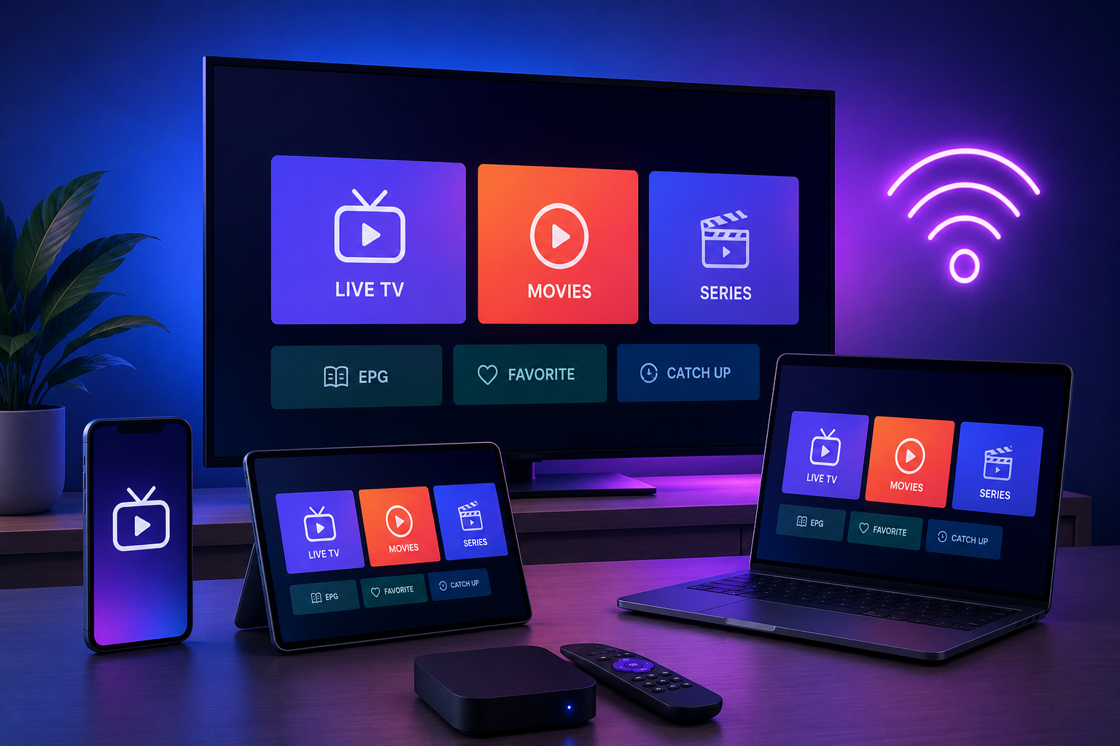
The diagram below recaps the full IPTV path — from your broadband connection through your home network to every screen in your house.
Final Verdict: Is IPTV Legal for You?
Yes, IPTV is legal in the USA and in most countries when the provider holds the appropriate licensing agreements. The same technology can be used legally or illegally — which is why you need to judge the provider, not the acronym. A safe IPTV subscription will always show transparency about rights, offer real customer support, take standard payment methods, and let you test the service before committing.
If you are ready to move forward, the main offer linked below is a reputable way to explore a licensed is iptv legal subscription. Compare the channel list, check the trial policy, and lock in the current promotional rate before it returns to standard regional pricing.
Final Subscription Window:
Main Offer Today →Affiliate Disclosure: Clicking this secure link verified by our network supports our team through standard partnership terms at zero extra cost to your invoice.
Frequently Asked Questions
Is IPTV legal in the USA?
Yes, IPTV is legal in the USA when the provider holds the rights to distribute its content. Major services like Hulu + Live TV, YouTube TV, and many regional telecom providers use IPTV technology lawfully. Unauthorized services that rebroadcast cable channels without permission are illegal, and the consequences fall mainly on the service operator, though subscribers can face ISP warnings or service loss. Always verify a provider's licensing information before paying.
How can I tell if an IPTV service is legal or illegal?
Check four things: transparent company information, a physical address and support team, standard payment options like credit card or PayPal, and clear licensing statements. Illegal IPTV services typically use cryptocurrency or shady payment processors, will not name their legal entity, and aggressively dodge questions about content rights. Another strong signal is price: legitimate channels cost real money to license, so a $10-a-month "everything" package is a major red flag.
What is the best legal IPTV service for live sports?
The best legal IPTV services for sports are those with rights to ESPN, FOX Sports, CBS Sports, and regional sports networks. In the US, YouTube TV and Hulu + Live TV are proven options; in Europe, services like DAZN or Sky Now hold licensed sports rights. For international viewers, choose a provider that owns the specific league rights you care about. Always start with the trial period to test stream quality on a live game day.
Do I need a VPN when using a legal IPTV subscription?
No, a VPN is not required for a legal IPTV subscription. In fact, using a VPN can trigger geo-blocking because services verify your location as part of their content rights. Some people use VPNs for general browsing privacy, but with a legal provider you are not doing anything to hide. Keep the VPN off while using your official IPTV app so the stream stays stable.
Can I get in trouble for watching illegal IPTV?
In most countries the distributor faces the main legal action, but viewers are not completely immune. Users can receive copyright infringement notices, have streams blocked, or lose their money when the pirate service shuts down. In some European countries, consumers have been fined in legal cases related to pirate IPTV subscriptions. The simplest protection is choosing a legal provider so the question never applies to you.
Is it legal to buy an IPTV box that already has channels loaded?
The box itself is usually not illegal because IPTV boxes are generic hardware. The problem is that many sellers pre-load unauthorized IPTV apps or pirate channel lists, which turns your purchase into a piracy tool. Courts in several countries have ruled against sellers who market "fully loaded" IPTV boxes, and the pre-installed apps typically break copyright rules. Only buy IPTV boxes from reputable brands, then install licensed IPTV apps yourself.
How much does a legal IPTV subscription cost in 2026?
A legal IPTV subscription typically ranges from $25 to $90 per month depending on the region and channel selection. Cable replacement services like YouTube TV cost around $73 per month in the US, while smaller licensed providers can run as low as $15 per month for a single country's channels. They remain cheaper than traditional cable packages while adding cloud DVR, multi-device streaming, and a better interface. You will almost never see a genuinely legal provider charging under $5 per month.
Where can I find a list of legal IPTV providers for 2026?
The most reliable method is checking the official websites of broadcasters you want to watch, since they list authorized partners. Industry directories and tech blogs update their "best legal IPTV services" lists every year with licensing details. You can also check official app stores, where platforms like Apple TV and Google TV curate verified IPTV apps. If a provider cannot be found in any official app store, treat that as a warning sign.