By Marcus T. · Updated 2026-08-16 · 12 min read

Short answer: IPTV is legal. The internet protocol used to deliver it is not a crime, and millions of people use IPTV every day through completely above-board services. The catch is that the word "IPTV" tells you nothing about whether a specific provider owns the rights to what it streams. Some IPTV services are fully licensed businesses; others are unauthorized re-streams of channels that should be paid for.
That distinction is why the question is iptv legal has no single answer. It depends on where a service sits on the legal/pirate spectrum, what country you're in, and whether the provider obtained permission from the rights holders. When someone searches is iptv legal in usa or reads forum threads about cheap subscriptions, the real answer is the same: legal when licensed, illegal when not.
The screen above may look like any ordinary TV guide, but that's exactly the problem. The interface doesn't show whether the service behind it has signed contracts with broadcasters. What looks like a normal channel list can be a fully licensed product or a stolen feed, and the difference is invisible until something goes wrong.
Why IPTV Misconceptions Can Cost You
Misunderstanding IPTV pushes most people into one of two harmful camps. The first camp avoids IPTV altogether because they think any service outside a cable contract is risky. That fear cuts them off from legitimate options that offer lower prices, more flexibility, and better interfaces. The second camp assumes every cheap subscription is fine because "everyone uses this one." That assumption has led people to hand their credit card numbers to anonymous Telegram operators and lose every penny when the service vanishes.
Bad information also creates real security problems. Unofficial IPTV apps often require sideloading, which bypasses the safety checks on smart TVs and streaming sticks. Users who would never download a random media player from a pop-up ad will happily sideload the same malware when it's presented as a way to watch premium sports for five dollars a month. Myth-busting isn't about legal nitpicking; it's about protecting your data and your wallet.
Myth 1: "All IPTV Is Illegal"
The most common myth in every search about this topic. People read one news story about an IPTV raid and assume the entire industry is criminal. That's like reading that someone used a phone to organize a fraud scheme and concluding that all phones are illegal.
The documented reality
IPTV simply means television delivered over the internet protocol. It's a distribution method, not a business model. YouTube TV, Hulu + Live TV, Sling TV, and DirecTV Stream are all legal IPTV services operating in the United States. Netflix also streams over IP. If a provider owns or licenses the content it delivers in your region, the service is legal. That's the core of iptv legality explained in plain language: the protocol is neutral, and the license is what matters.
Myth 2: "Paying for IPTV Makes It Legal"
A lot of IPTV services charge $10 or $15 per month, and customers assume the price proves legitimacy. It doesn't. Money changing hands is a transaction, not a license.
The documented reality
Illegal IPTV operators run fully functioning billing systems, take credit cards, and even respond to support tickets. The monthly price simply covers their operating costs, including payment processing and reseller commissions. If your goal is to learn how to find legal iptv, never treat "I paid for it" as evidence of legitimacy. The test is whether the provider can prove it holds the rights, not whether it processes payments smoothly.
Myth 3: "A VPN Makes Any IPTV Service Legal"
This is one of the most popular beliefs in streaming communities. The logic sounds reasonable: if my IP address is hidden, how can anyone connect the feed to me? But legality is not determined by how hard it is to trace you.
The documented reality
A VPN protects your privacy and can be part of a safe iptv subscription setup. It cannot turn an unauthorized stream into a licensed one. The copyright holder still has the exclusive right to control distribution, and the stream remains unauthorized regardless of the IP address you connect from. VPNs also do nothing to reduce the most common risks of shady IPTV services: malware, stolen card details, and sudden shutdowns.
Myth 4: "If It's Sold Openly, It Must Be Legal"
People see IPTV apps in an official app store or buy a "fully loaded" streaming box at a market and assume both are legitimate. Openly selling something doesn't make it legal.
The documented reality
App stores remove thousands of pirated applications every year after copyright complaints arrive. Store placement means the app passed an automated review, not a legal clearance. The same logic applies to pre-loaded streaming boxes, where European courts have ruled that selling devices with unauthorized IPTV apps can itself infringe copyright. If you're weighing the iptv legal vs illegal question, the marketplace where you found the product is not trustworthy evidence.
Myth 5: "Viewers Never Get in Trouble"
The final myth is also the most tempting: "Watching is harmless, and nobody on the viewer side ever gets caught."
The documented reality
Copyright enforcement in the United States targets distribution, and ordinary viewers are rarely prosecuted. But "rarely" is not "never," and enforcement practices vary by country. Even where legal action stays focused on the operators, viewers still lose: they pay a black-market vendor, hand over personal data, and receive unstable streams that disappear without notice. The risk of being scammed is far higher than the risk of a court summons, but both exist.
What Actually Works: How to Find Legal IPTV
There is a reliable way to separate legal IPTV from piracy. Licensed providers behave differently from services that expect to close down in a few months because they have quarterly bills, payroll, and a reputation to protect.
The best legal iptv service for you is the one that passes all of the checks below, carries the channels you actually watch, and lets you start with a short billing cycle instead of a whole year.
- Check the provider's legal identity. A licensed service publishes its company name, country of registration, and terms of service. Anonymous Telegram-only operators can't.
- Look for content-rights statements. Legitimate providers either produce their content, license it from the rights holder, or clearly state where channels come from.
- Read independent reviews, not sponsored posts. Search the provider name alongside terms like "scam," "shutdown," or "refund" to see what real paying customers report.
- Pay monthly at first. A provider that offers a one-month plan or a free trial is much more confident in its product than one that demands a 12-month commitment up front.
- See which payment method is accepted. Established payment processors cut off unlicensed vendors, so a provider that survives their screening is a better bet.
- Confirm regional rights. Broadcast rights are usually country-specific. A service promising "all worldwide channels" is often reselling content it has no right to distribute.
These six steps won't name a single channel for you, but they will give you a durable screening process. Casual reviews of legal iptv providers 2025 can help you build a shortlist; the verification steps above let you test that shortlist for yourself.
Popular Belief vs Reality: IPTV Legality at a Glance
The table below summarizes the five myths and the documented reality behind them. Keep it handy the next time someone recommends a suspiciously cheap "full package" service.
If you want to know where to buy legal iptv, the official provider website is the only safe starting point. Resellers operate in the streaming world too, but they can only be trusted if the provider itself lists them as authorized partners.
Compare the actual channel list, server regions, and billing terms on a single page before you enter your card details.
View the is iptv legal Platform →Pros and Cons of a Legal IPTV Subscription
Choosing a licensed provider means giving up the fantasy of unlimited channels for $7 a month. For most people, the trade-off is worth it.
✓ Benefits & Pros
Stable streams that don't die during big matches
Real customer support and clear billing records
Compatible apps on official stores and TV platforms
No malware risk from sideloaded APK files
✗ Limitations & Cons
Higher monthly price than black-market subscriptions
Regional availability can be limited
Fewer obscure international channels
Sports packages sometimes need extra add-ons
RECOMMENDED RESOURCE
is iptv legal
Searching for a provider that passes the transparency checks above? Start with services that publish their terms, offer short trial plans, and accept mainstream payment methods.
Explore is iptv legal Plans →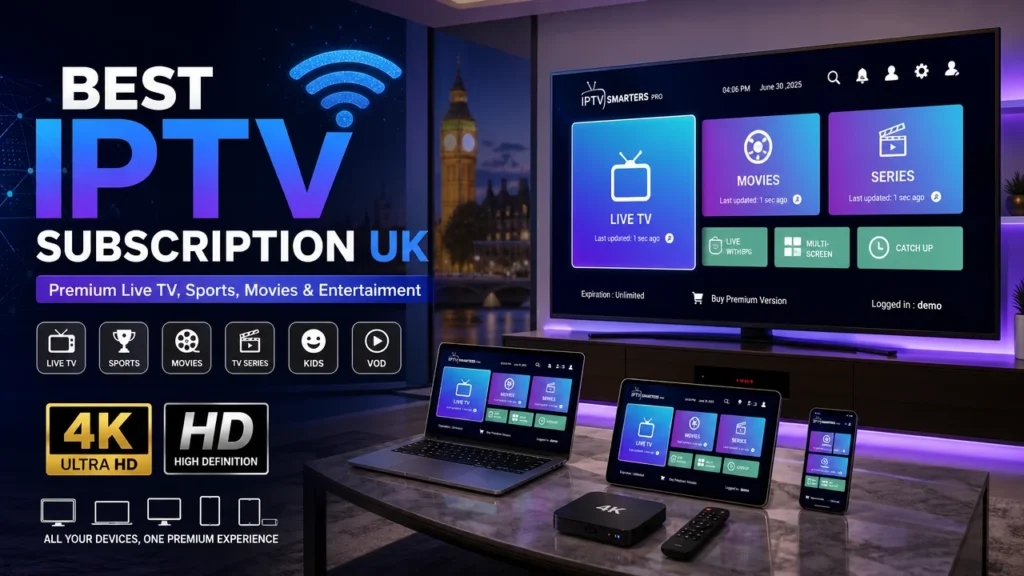
A legitimate provider usually gives you a dashboard like the one above: a coherent account area, a searchable catalog, and proper device support. Compare that with many unauthorized apps, which are little more than a bare player and an unlabeled channel list. The visual difference helps you form a first impression, but always verify the licensing paperwork before handing over your card.
What to Do If You Already Subscribed to a Questionable Service
If you're already paying for a service that fails the checks above, act calmly and carefully. You don't need to panic, but you do need to protect yourself.
- Cancel the automatic renewal. Contact your bank or payment provider and remove the charge, and delete the saved payment method from the app itself.
- Scan your devices. Run a reputable security scanner on your phone, computer, or streaming box if the app was sideloaded.
- Report the loss. Many card providers let you dispute charges for services that disappear or never deliver what was promised.
- Replace it with a legal alternative. Use the six verification steps above to find a provider that is transparent about what it offers and how it is licensed.
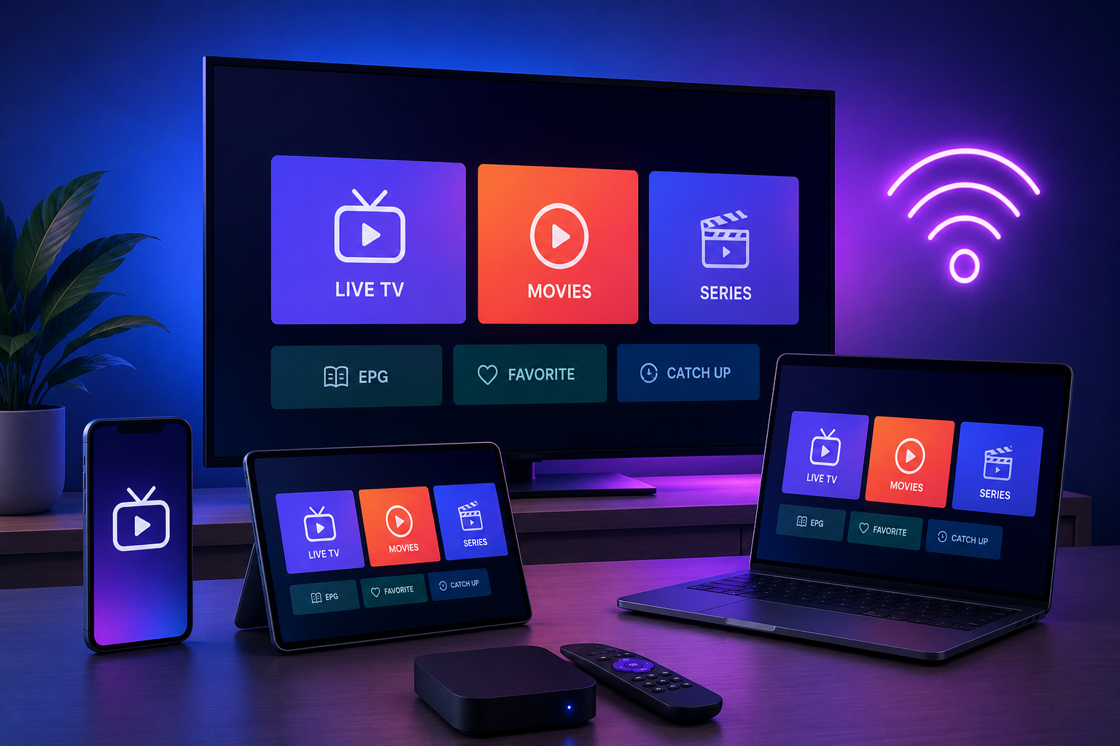
As the diagram above illustrates, IPTV is infrastructure, not a crime. The same technical path carries a hit show on a licensed streaming service and an unauthorized re-stream of a pay-TV channel. The packets behave the same way; what changes is the legal right behind each byte. Once you understand that, the iptv legal vs illegal distinction becomes a question of documentation, not technology.
The bottom line: IPTV is legal when the provider has the rights, and illegal when it doesn't. Good providers are transparent about their company identity, content rights, and payment processes. Bad ones hide behind encrypted chats, demand yearly prepayment, and disappear when the heat arrives. The same rules apply whether you're watching on a smart TV, a laptop, or a streaming box.
Featured Streaming Selection:
Find Out More About is iptv legal →Affiliate Disclosure: Clicking this secure link verified by our network supports our team through standard partnership terms at zero extra cost to your invoice.
Frequently Asked Questions
This article contains affiliate links. Our editorial analysis remains independent.