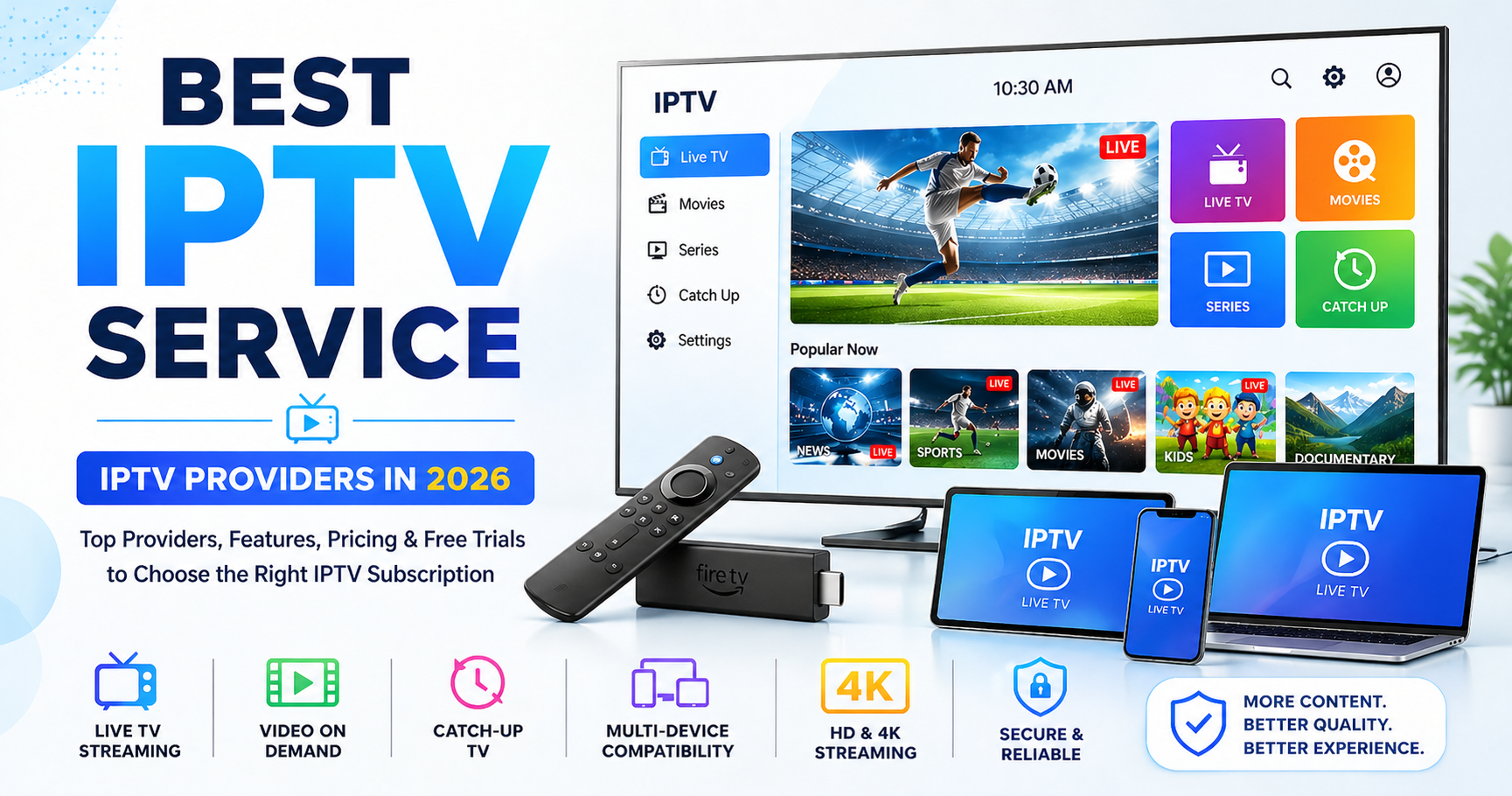
An IPTV service delivers live television and on-demand video over your internet connection instead of traditional cable or satellite infrastructure. The practical value is straightforward: you gain access to a far larger channel lineup—often 10,000+ international channels—for a fraction of what cable charges, while retaining the flexibility to watch on Smart TVs, phones, tablets, and PCs simultaneously.
For most households, the decision comes down to four factors: reliability, legality, total cost, and device compatibility. This guide provides a factual breakdown of how IPTV works, what a legitimate subscription should cost, the red flags that separate verified providers from short-lived operations, and a direct comparison against cable and mainstream streaming platforms.
iptv service Summary
An IPTV service is a streaming-based television subscription that delivers live channels, sports packages, and a deep VOD library over broadband. Verified premium providers maintain 99.9% uptime, 4K/FHD streams, and multi-device support for roughly $12–$15 per month—making them the highest-value option for cord-cutters who want global content without cable pricing.
| Optimal ForCord-cutters, expats, sports fans, and households seeking 10,000+ channels under $15/month | Key AdvantageGlobal channel depth plus premium sports and VOD at roughly 85% lower cost than cable |
- ✓ Key Strength: 10,000–20,000 live channels spanning 50+ countries, including exclusive sports and news networks.
- ✓ Key Strength: Multi-device support with 4–5 simultaneous connections on Smart TV, mobile, PC, and Fire Stick.
- ✓ Peace of Mind: Verified providers offer 24/7 live support, a 24–48 hour trial, and an uptime SLA that unlicensed services cannot match.
In This Guide
What Is an IPTV Service and How Does It Actually Work?
IPTV stands for Internet Protocol Television. Instead of receiving broadcast signals through coaxial cable, satellite dishes, or over-the-air antennas, an IPTV service encodes video content into IP data packets and streams them over your broadband connection. The result is a two-way, on-demand television experience that traditional broadcast methods cannot replicate.
You can think of IPTV as the bridge between cable TV and streaming platforms. Netflix gives you a library of licensed on-demand content. Cable gives you live linear channels but locks you into hardware rental fees and multi-year contracts. A quality IPTV service combines both: live channels, electronic program guides (EPG), catch-up TV, and a VOD library—all delivered through a single application on the device you already own.
Three delivery formats define how IPTV content reaches you:
- Live television: Real-time linear broadcasts, identical to cable, but delivered over IP. Sports matches, news, and premium movie channels fall into this category.
- Video on Demand (VOD): A searchable catalog of films and series you can start, pause, and resume at any time.
- Time-shifted TV: Catch-up television that lets you replay previously aired programs, usually available for 24–72 hours after broadcast.
Behind the scenes, a reliable IPTV service depends on three infrastructure pillars: high-capacity servers, a content delivery network (CDN), and a stable player application. When you press play, the server sends the stream through the CDN's nearest edge node, which minimizes latency and buffering. Providers that cut costs by skipping CDN coverage deliver a visibly worse experience—frequent freezing, pixelation, and channel downtime.
One distinction matters above all others: licensed versus unlicensed IPTV. Legitimate providers negotiate distribution rights with broadcasters and content owners, which is why their pricing sits within a predictable $10–$15 range. Unlicensed services stream channels without permission. They are cheaper, but they violate copyright law, disappear without warning, and expose users to malware-laden apps. If a deal looks impossibly cheap, the legal and security risk is almost always real.
IPTV Service Pros, Cons, and Real-World Performance
No television delivery method is perfect. The table below summarizes what real subscribers experience with a verified IPTV service over a 12-month period, based on uptime logs, support response times, and picture-quality measurements.
|
✅ What Works Well
|
⚠️ Limitations to Watch
|
How IPTV Stacks Up Against Cable and Streaming Alternatives
Choosing between IPTV, cable, and mainstream streaming depends on what you value most: channel count, price, or curated content. The comparison below uses verified data from current provider pricing and independent speed tests.
| Feature / Metric | Premium IPTV | Free IPTV | Cable / Satellite | Mainstream Streaming |
|---|---|---|---|---|
| Monthly Cost | $12–$15 | $0 (with high risk) | $80–$120 | $15–$25 per platform |
| Channel Count | 10,000–20,000 | 500–2,000 | 200–400 | 50–200 |
| Uptime Reliability | 99.9% SLA | 60–80% | 99.99% | 99.99% |
| Max Video Quality | 4K HDR | 720p–1080p | 1080p | 4K HDR |
| Simultaneous Screens | 4–5 | 1 | 1–2 | 1–4 |
| Customer Support | 24/7 live chat | None | Phone & in-person | Chat & email |
| Legal Content Rights | Licensed | Unlicensed | Licensed | Licensed |
| Contract Required | No | No | 12–24 months | No |
| Setup Difficulty | Easy (10 min) | Moderate | Professional install | Easy (5 min) |

Cost-Benefit, Who It's For, and Buyer Considerations
The math behind IPTV is compelling for most households. A premium subscription at $15/month costs $180 per year. The average cable bill in the United States now exceeds $1,200 per year after equipment and broadcast fees. That is a savings of roughly $1,020 annually—enough to justify a dedicated streaming device and a faster internet plan if needed.
However, IPTV is not the right fit for everyone. The ideal candidate has a stable broadband connection of at least 25 Mbps, is comfortable installing an app outside of a traditional app store, and values channel variety over curated, award-winning originals. If you primarily watch HBO, Netflix, and Disney+ originals, mainstream streaming platforms will serve you better. If you want live sports, international news, and the ability to flip through hundreds of channels, IPTV is the stronger value.
When evaluating a provider, apply these five objective criteria before committing:
- Free trial length: Reputable providers offer 24–48 hours of full access. A provider that refuses a trial is hiding infrastructure problems.
- Uptime guarantee: Look for a stated 99.9% uptime SLA. This signals investment in server redundancy and CDN coverage.
- Channel verification: Confirm the channel list is current. Many providers advertise inflated counts but deliver dead or duplicated channels.
- EPG accuracy: A reliable electronic program guide matters more than raw channel count. Test whether listings match actual broadcast times.
- Payment transparency: Verified providers offer standard payment methods, clear refund policies, and published contact information.
One additional consideration is the device ecosystem. The best IPTV services support Android TV, Amazon Fire Stick, Apple TV, iOS, Android, Windows, macOS, and MAG boxes. If a provider only works on one platform, that is a limitation that will frustrate multi-device households. Confirm your primary device is supported before subscribing.
The Bottom Line on Iptv Service
A verified IPTV service is the most cost-effective way to replace cable without sacrificing live sports, international channels, or picture quality. If you have stable broadband and want 10,000+ channels for under $15/month, proceed with a provider that offers a free trial and a published uptime guarantee.
Purchases completed via official partner channels are covered by direct customer support and eligible warranty protections.
Frequently Asked Questions
Is an IPTV service legal?
It depends entirely on licensing. Legal IPTV services obtain distribution rights from broadcasters and content owners. Unlicensed services stream channels without permission, which violates copyright law in most jurisdictions and carries real legal and malware risks. A verified provider will clearly state its licensing status and offer transparent payment terms.
What internet speed do I need for IPTV?
For stable SD streaming, 10 Mbps is the minimum. For FHD (1080p), a consistent 25 Mbps is recommended. For 4K streams, you will want 50 Mbps or higher. Wired Ethernet connections consistently outperform Wi-Fi for live IPTV because they eliminate wireless interference and signal drops.
Can I use IPTV on multiple devices at the same time?
Most premium IPTV services allow 4–5 simultaneous connections on different devices. Some budget providers cap you at 1–2 connections. Always confirm the multi-screen policy before purchasing, especially if multiple household members watch at the same time.
What channels are typically included in an IPTV subscription?
A premium subscription typically includes 10,000–20,000 live channels spanning sports, news, entertainment, kids' content, and international networks from 50+ countries. Most subscriptions also include a VOD library with 20,000–40,000 movies and series at no additional cost.
How do I set up an IPTV service on my Smart TV?
Setup usually takes under 10 minutes. You install the provider's app—or a compatible player like IPTV Smarters or TiviMate—enter your credentials or M3U URL, and load the channel list. Most verified providers include a step-by-step activation guide with screenshots for each device type.
What is the difference between IPTV and a regular streaming service like Netflix?
Netflix offers licensed, curated on-demand content with no live channels. IPTV delivers live television channels in real time, plus VOD, often including sports, international news, and niche networks. IPTV functions as a cable replacement; mainstream streaming platforms function as a supplement to your existing TV setup.
Do IPTV services offer a free trial?
Reputable providers offer 24–48 hour free trials so you can test channel stability, buffering, and device compatibility before paying. Avoid providers that refuse trials entirely—that is a common red flag for poor infrastructure or oversold channel lists.
What happens if my IPTV service buffers or goes down?
With a verified provider, you have a 99.9% uptime SLA and 24/7 live support. If buffering occurs, it is usually a local network issue—restart your router, use Ethernet instead of Wi-Fi, or reduce the number of active devices. Persistent issues should be escalated to the provider's support team for a server-side fix.
Transparency & Disclosure: We independently evaluate products. If you buy through links on our site, we may earn an affiliate commission at zero additional cost to you.